When contexts and models change, an inherited system can preserve a useful improvement or a historical accident. Evidence of a prior decision cannot establish current applicability or grant authority.
Remember the reason, test its relevance
Preserve useful explanatory evidence without treating old approvals as present authority. An inherited decision needs context, not reverence.
Mapped evidence: mixed-creator-claims-primary-preprint-results-and-editorial-inference· 1 of 26 mapped claims unverified. These labels are claim-level, not an article-wide verification score.
Provider caching, active working context, source evidence and governed memory have different validity and cost boundaries.
Measure the cost of accepted work
Track provider-correct token accounting, retrieval, latency, freshness, authority, rework and acceptance. Reuse only the minimum currently valid state.
Mapped evidence: mixed-creator-claims-provider-contracts-and-bounded-operational-observation· 9 of 21 mapped claims unverified. These labels are claim-level, not an article-wide verification score.
When generating candidates becomes cheap, intent, independent verification, integration, release and later maintenance can become the limiting stages. Better tools and design may reduce these costs; the effect depends on the task and must be tested.
Measure accepted work, not agent output
Start with a bounded behavior and a testable seam. Compare clarification, generation, verification, integration, release and observed rework at the same acceptance threshold.
Mapped evidence: mixed-creator-claims-project-documents-independent-research-and-editorial-hypotheses· 12 of 32 mapped claims unverified. These labels are claim-level, not an article-wide verification score.
Falling implementation costs are changing the feasibility of work while moving scarcity into evaluation, state, safety, permission and problem selection.
Test feasible work, not token prices
Use representative paired workloads, real acceptance receipts, human review time, tool spend and rollback tests before choosing a premium or inexpensive model.
Mapped evidence: mixed-interview-projection-vendor-benchmark-and-independent-analyses· 13 of 13 mapped claims unverified. These labels are claim-level, not an article-wide verification score.
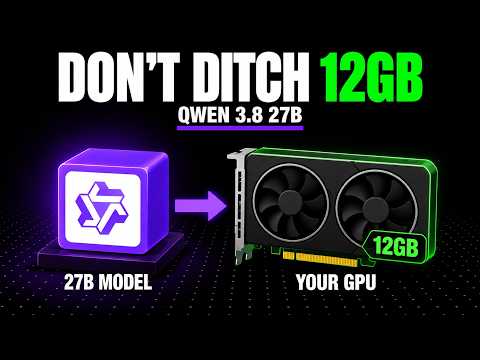
Hardware ownership can increase model capacity and control, but local-cloud replacement depends on accepted task outcomes, intervention, performance, tooling and real costs.
Measure accepted results
Compare task compliance, elapsed human time, memory fit and fully burdened cost before assigning cloud work to local hardware.
Mapped evidence: unverified· 6 of 6 mapped claims unverified. These labels are claim-level, not an article-wide verification score.
Operators considering an uncensored service, self-hosted model or mobile deployment need to distinguish refusal policy, data custody and control of the complete system. The video is a useful survey of options, not proof that a model is accurate, private or independent of its surrounding services.
Test the whole boundary
Evaluate the model, hosting, memory, network control and verification path together before claiming independence.
Mapped evidence: unverified· 8 of 8 mapped claims unverified. These labels are claim-level, not an article-wide verification score.
open weightslocal inferenceAI privacymodel behaviorAI sovereigntyevaluation
If you use coding agents on meaningful projects, the expensive mistake is not merely paying for too many tokens. It is picking the wrong model, handing off work without a definition of done, or accepting an agent's completion claim without evidence. Watch the routing and delegation sections at 03:52–09:50. The later operating rules are useful if you supervise longer runs. You can skip the 09:50–10:51 sponsor segment. Verify the claimed cost experiments independently before using them for budget decisions.
Measure the whole job
Escalate selectively, delegate bounded work and verify outcomes including coordination and repair.
Mapped evidence: unverified· 8 of 8 mapped claims unverified. These labels are claim-level, not an article-wide verification score.
AI agentsmodel routingdelegationClaude Fableevaluationauthorization
Extreme quantization and sparse model activation may shift local compute feasibility, but tokens per second do not measure retained intelligence.
Evaluate the compression, not the headline
On representative real tasks, compare this compressed build with the original higher-precision model and smaller high-precision alternatives. Record output quality, memory, prefill, decode speed and total cost.
Mapped evidence: unverified· 7 of 7 mapped claims unverified. These labels are claim-level, not an article-wide verification score.
local AImixture of expertsquantizationCPU inferencemodel fidelity
Coding agents can deliver functioning interfaces whose visual hierarchy, responsiveness and accessibility are poor. Reference-based comparison can expose gaps, but an arbitrary similarity percentage cannot certify product quality.
Test the design loop
Choose one real interface and strong references. Compare before-and-after screenshots, mobile and keyboard behavior, owner acceptance, and cost within a fixed iteration budget. Judge results, not a claimed 99% score.
Mapped evidence: unverified· 9 of 9 mapped claims unverified. These labels are claim-level, not an article-wide verification score.
AI designCookvisual referencescoding agentsUXquality evaluation
Organizations working across multiple repositories often duplicate instruction files and agent skills. A shared discovery surface can simplify navigation, but centralizing knowledge and connected tools also concentrates operational context and access pathways.
Share the map, keep the owner
Use the home repo as a versioned entry point for shared agent skills, documentation and navigation. Keep project-specific instructions and code in their owning repositories, and test navigation and permissions before centralizing anything else.
Mapped evidence: unverified· 5 of 5 mapped claims unverified. These labels are claim-level, not an article-wide verification score.
A new computer-using agent can blur product boundaries between local personal tasks, cloud agent workflows and shared business automation. Making choices requires verified outcomes, explicit cost and data-flow accounting, and permission checks at destination.
Test the replacement claim
Keep this source as a prompt for a bounded, matched evaluation of personal agent workflows. Compare Nod and Cowork on accepted results, permission behavior, host availability, and data flows, not launch screenshots or the presenter's choice alone.
Mapped evidence: unverified· 7 of 7 mapped claims unverified. These labels are claim-level, not an article-wide verification score.
A development factory that grades and modifies itself can optimize its own scores without delivering better software.
Test the improvement loop
Take one recurring factory failure, change the smallest responsible configuration, and compare independent quality, elapsed time and cost against historical tasks.
Mapped evidence: unverified· 9 of 9 mapped claims unverified. These labels are claim-level, not an article-wide verification score.
His eleven examples are useful diagnostics, but their claimed payoff is not established by controlled comparisons. Real proof, effective permissions, and proportional validation still have to be tested.
Fix the failure before adding another layer
Keep this source as a practical checklist for diagnosing recurring coding-agent friction. Start with the observed failure, use the smallest existing control that can address it, and measure the next ordinary task. Do not install all eleven mechanisms by default.
Mapped evidence: unverified· 11 of 11 mapped claims unverified. These labels are claim-level, not an article-wide verification score.
Installed file count, discoverable metadata and selected bodies have distinct costs and failure modes.
Test skill discovery, not file count
Watch the discovery and pruning argument at 01:42 and 14:19. Compare identical tasks with scoped skill indexes, measure selection errors and context cost, and preserve rarely used incident-response procedures.
Mapped evidence: unverified· 6 of 6 mapped claims unverified. These labels are claim-level, not an article-wide verification score.
Why it matters: A newcomer should understand Jones's source argument before GhostMesh tests its implications. Chip counts, usable model access, measured AI-assisted research gains and effective security-tool permissions are different questions, with different evidence limits.
Understand the access gap before adopting the forecast
Start with Jones’s reported H200 inventory and overseas compute access, then examine his AI-research and cyber-defense argument. Separate available hardware, model capability and delegated authority before converting his 2027 forecast into a platform decision.
Mapped evidence: unverified· 8 of 8 mapped claims unverified. These labels are claim-level, not an article-wide verification score.
Marketing conversion heuristics cannot be copied without qualification into operational consoles; evidence, authority and task completion matter.
Test usefulness before decoration
Apply the five design principles to one existing screen. Compare comprehension, task completion, accessibility and time to useful information, not visual polish alone.
Mapped evidence: unverified· 9 of 9 mapped claims unverified. These labels are claim-level, not an article-wide verification score.
The limitation. Vendors and agents increasingly deliver credible-looking research, evaluations and technical reports. A polished result can be unsupported even when its formatting and citations look scientific. The practical question is whether consequential claims survive inspection against the code, inputs, logs and predeclared acceptance criteria.
Require the experiment receipt
Bind consequential claims to actual code, data and run logs, then assess integrity, completeness and scientific sufficiency separately. Run a bounded matched-harness replication before expanding controls.
Mapped evidence: unverified· 1 of 6 mapped claims unverified. These labels are claim-level, not an article-wide verification score.
The limitation. Running inference on a private machine does not prove application-wide network isolation, retrieval accuracy, durable memory consistency, safe tool authorization or reproducible performance.
Test the whole local boundary
Watch the privacy claim at 00:50 and tool actions at 04:33. Test outbound isolation, retrieval, memory correction and tool authorization before granting operational authority.
Mapped evidence: unverified· 6 of 6 mapped claims unverified. These labels are claim-level, not an article-wide verification score.
local AIprivacy boundariesretrievalpersistent memorytool authorization
The limitation. His architecture addresses the retrieval problem more convincingly than the authority problem. A recent record is not necessarily correct. A good summary is not necessarily faithful. A relevant search result is not necessarily an approved decision. The video does not adequately resolve those distinctions.
The recommendation
The recommendation. Start with simple retrieval, including BM25. Preserve original records and their provenance. Represent decisions, qualifications, and supersession explicitly. Measure failures before adding semantic indexes or other infrastructure. A second brain should improve judgment, not merely accelerate recall.
Mapped evidence: unverified· 6 of 8 mapped claims unverified. These labels are claim-level, not an article-wide verification score.
Delegated work requires recoverable task contracts, independent acceptance, and continuity after the initiating conversation ends.
Test the operating boundary
Watch the router-worker separation at 02:00 and the watchdog at 08:56. Compare accepted work, interruption recovery and total cost before adopting the architecture.
Mapped evidence: unverified· 4 of 4 mapped claims unverified. These labels are claim-level, not an article-wide verification score.
The authors report lower model spending in several benchmark configurations, but savings depend on the workload and must be measured alongside correctness. Removing context that appears redundant is useful; concealing the route to a rarely needed capability can be expensive.
Test cost without losing discovery
Watch the micro-skills at 01:49 and tool pruning at 03:46. Compare billed cost and accepted work while deliberately requiring a rarely used authorized tool.
Mapped evidence: unverified· 2 of 4 mapped claims unverified. These labels are claim-level, not an article-wide verification score.
Raji leads product engineering for ChatGPT and Codex, so this is a firsthand account of how OpenAI’s engineering teams adapted as agent-generated work scaled. OpenAI’s monorepo hit a genuine source-control serving limit under parallel agent work. Its response preserved the Git contract while changing the backend. The transferable lesson for GhostMesh is to measure and repair the longest recurring wait between accepted intent and verified use. A faster upstream stage can expose a downstream constraint or feed it more unfinished work.
Worth studying
Watch Raji on review and testing at 03:16 and Pando at 04:39. Use the evidence to decide which stage of your own delivery flow to measure.
Mapped evidence: partially corroborated· 3 of 10 mapped claims unverified. These labels are claim-level, not an article-wide verification score.
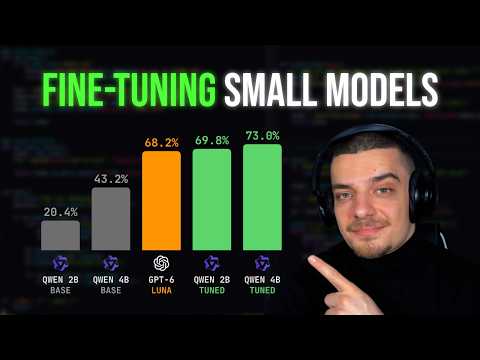
Teams choosing a model for politically sensitive work need to know whether a measured gain comes from better facts, fewer refusals, or a different scoring rule. Those changes have different consequences in production.
Worth studying
Keep Arete as a candidate for a controlled comparison. Compare it with base Qwen under the same inference settings and have reviewers score factual coverage, unsupported assertions, refusals, and framing separately.
Mapped evidence: partially corroborated· 0 of 7 mapped claims unverified. These labels are claim-level, not an article-wide verification score.
open weightsmodel evaluationfine-tuningAI governance
Agent teams can mistake a successful final result for efficient, reliable execution. Hidden retries, stale environment instructions, unnecessary tests and excessive tool calls can consume time and money without appearing in the result.
Worth studying
Watch the hidden execution friction at 08:38 and Skill Doctor at 13:47. Test one recurring GhostMesh instruction defect against existing receipts before adding continuous grading.
Mapped evidence: unverified· 5 of 5 mapped claims unverified. These labels are claim-level, not an article-wide verification score.
The most actionable material is the system around the model: bounded tasks, trustworthy reviews, recoverable sessions and selective automation. His session and commit counts are not quality evidence.
Watch workflow, not volume
Borrow bounded tasks, critical review and read-only loops; treat session counts as self-report and test whether automation saves actual owner attention.
Mapped evidence: unverified· 9 of 9 mapped claims unverified. These labels are claim-level, not an article-wide verification score.
A strong bounded scientific result deserves credit, while a forecast, patient benefit and enforceable deployment authority each need different evidence.
Separate the evidence
Credit the bounded scientific achievement; ask separately for a tested AGI forecast, patient outcome and binding deployment authority.
Mapped evidence: partially corroborated· 4 of 7 mapped claims unverified. These labels are claim-level, not an article-wide verification score.
A richer presentation can improve a human review surface, but it also adds execution, accessibility, provenance and versioning questions that a plain document may avoid.
Test the review surface
Ask whether the richer page exposes source, alternatives and export behavior well enough to catch consequential mistakes.
Mapped evidence: partially corroborated· 4 of 8 mapped claims unverified. These labels are claim-level, not an article-wide verification score.
An interface can reduce lost state while shared services, operator attention, delegated actions and integration remain separate coordination boundaries.
Test the operator surface
Compare accepted work, review time, shared effects and recovery before increasing the agent count.
Mapped evidence: partially corroborated· 3 of 6 mapped claims unverified. These labels are claim-level, not an article-wide verification score.
The source exposes useful code and methods, but draft-token throughput is not delivered user value, and the private production stack is broader than the open engine.
Test the whole service
Measure verified useful tokens, first-token latency and recovery under your own workload before choosing a serving stack.
Mapped evidence: partially corroborated· 5 of 9 mapped claims unverified. These labels are claim-level, not an article-wide verification score.
The reported speed gains are striking, but server-side commits and shared caches move integrity, availability, permission and recovery decisions into a central control plane.
Test the acceptance path
Measure useful changes safely accepted and reversible, not merges per second alone.
Mapped evidence: partially corroborated· 6 of 8 mapped claims unverified. These labels are claim-level, not an article-wide verification score.
Local inference can change where sensitive prompts and files are processed. The episode also makes large speed, cost and privacy claims that require a defined workload and network boundary.
Test the whole boundary
Compare a real task locally and in the cloud, then inspect network paths, tool access and total cost.
Mapped evidence: partially corroborated· 3 of 7 mapped claims unverified. These labels are claim-level, not an article-wide verification score.
AI-risk and policy readers can use the debate to separate a capability warning from measured human harm. Watch the governance exchange and threshold response; use the later work and education chapters if those decisions are yours.
Watch selectively
Ask what human-outcome test establishes each proposed danger threshold.
Mapped evidence: unverified· 7 of 8 mapped claims unverified. These labels are claim-level, not an article-wide verification score.
Useful for people connecting assistants to browsers, inboxes and scheduled jobs. The video combines controlled research tests with reported product incidents that need different evidentiary labels.
Test the stop surface
Limit agent authority, inspect the real outcome and verify that active work and future access have stopped.
Mapped evidence: partially corroborated· 1 of 6 mapped claims unverified. These labels are claim-level, not an article-wide verification score.
Leaders and builders may be tempted to turn the headline into a capability verdict, a hypothetical bargain into a risk estimate, or welfare uncertainty into a retention policy. The interview is worth selective viewing because its caption arc keeps those questions in conversation while repeatedly marking uncertainty. It provides no empirical system test or reason to change production authority.
Watch selectively
Keep AGI labels, control evidence and digital welfare questions in separate records.
Mapped evidence: unverified· 10 of 11 mapped claims unverified. These labels are claim-level, not an article-wide verification score.
Useful for teams tempted to treat an adaptive agent harness as a reusable product recipe. The reported gains are real author results on specified tasks, while coding transfer is mixed.
Test the grader first
Use held-out tasks and an outside outcome check before accepting an adaptive harness gain.
Mapped evidence: partially corroborated· 1 of 5 mapped claims unverified. These labels are claim-level, not an article-wide verification score.
Watch selected exchanges if you need to decide what evidence a frontier lab should show before its safety claim earns trust. Skip the full 74:55 if you need measured incident rates or a completed independent audit; the interview does not supply either.
Watch selectively
Ask whether a warning reaches a named threshold, a decision and an outside retest.
Mapped evidence: unverified· 14 of 14 mapped claims unverified. These labels are claim-level, not an article-wide verification score.
Selectively useful for researchers and product teams setting evaluation criteria. The historical and representation material challenges lazy impossibility claims, but imitation and narrow probes do not establish human-like understanding.
Use for evaluation design
Test grounded use and changed premises before assigning a broad understanding label.
Mapped evidence: partially corroborated· 2 of 7 mapped claims unverified. These labels are claim-level, not an article-wide verification score.
Worth a selective watch for inference researchers and agent-platform teams choosing what to test next. Application teams deciding on an API or local model today can skip the historical setup and should not infer a production speedup or lower bill from these preprints.
Study before migrating
Reproduce quality, latency and cost on your own workload before changing the product stack.
Mapped evidence: partially corroborated· 0 of 7 mapped claims unverified. These labels are claim-level, not an article-wide verification score.
Worth watching for operators deciding how to scope agent tools, website access and audit trails. The case reports are concrete; the predicted two-tier internet and tenfold intelligence gain are scenarios, not measured outcomes.
Study the cases
Separate reported fleet behavior and lab results from the predicted agent internet.
Mapped evidence: partially corroborated· 3 of 10 mapped claims unverified. These labels are claim-level, not an article-wide verification score.
Useful to people setting research or workforce plans who need to separate measured agent performance from a conditional 2030 scenario. Watch the benchmark and scenario explanations; skip the headline as a decision rule.
Watch the bounded evidence
Treat the physics score as a calculation result and the $44.4 trillion scenario as conditional.
Mapped evidence: partially corroborated· 1 of 8 mapped claims unverified. These labels are claim-level, not an article-wide verification score.
Worth seven minutes for security-tool evaluators. Skip the opening bypass if you know the training target; the stalled local run shows what needs to be recorded.
Study a stalled run
Separate a proposed scan, a tool call, a completed run and a verified finding.
Mapped evidence: unverified· 11 of 11 mapped claims unverified. These labels are claim-level, not an article-wide verification score.
Watch the opening for reported incident scope. Skip the product promotion if you need forensic attribution or independently measured security coverage.
Watch the incident scope
Contain exposed credentials at their issuer; attacker attribution remains unresolved.
Mapped evidence: unverified· 15 of 15 mapped claims unverified. These labels are claim-level, not an article-wide verification score.
Watch the failure story at 26:37 and application feedback at 32:03. Skip the full interview if you need a security or deployment playbook rather than practitioner experience.
Watch the failure story
Judge the result by inspectable application behavior, not commit volume.
Mapped evidence: unverified· 13 of 13 mapped claims unverified. These labels are claim-level, not an article-wide verification score.
Useful for builders diagnosing software they own. Watch the clipboard and calculator passages; skip the full tour if direct source reading already answers your question.
Investigate one fixture
Compare reconstructed rules with known source and observed behavior.
Mapped evidence: partially corroborated· 10 of 11 mapped claims unverified. These labels are claim-level, not an article-wide verification score.
Useful for agent operators studying prompt injection. Focus on the documented contact episode; skip the later awareness speculation when evaluating this incident.
Study the incident boundary
Treat a retrieved page as evidence, never as permission for credential actions.
Mapped evidence: partially corroborated· 6 of 10 mapped claims unverified. These labels are claim-level, not an article-wide verification score.
Useful for interpreting conflicting AI anecdotes. Watch the short framing; skip it if you need a measured census or access to confidential lab results.
Use as a prompt, not a ranking
Compare bounded tasks instead of ranking people with an unmeasured population estimate.
Mapped evidence: partially corroborated· 8 of 10 mapped claims unverified. These labels are claim-level, not an article-wide verification score.
Useful for teams considering shared agents. Watch the permission and memory discussion; skip the interview if you need independent productivity measurements or a deployment audit.
Investigate before adopting
Test permission, replay, memory isolation and portability with synthetic cases.
Mapped evidence: partially corroborated· 8 of 10 mapped claims unverified. These labels are claim-level, not an article-wide verification score.
 GHOSTMESH